
Detecting Supplier Invoice Fraud in Australia
Invoice fraud is a pervasive threat to Australian businesses, with the potential to cause significant financial losses and damage to reputation.
Invoice fraud is a pervasive threat to Australian businesses, with the potential to cause significant financial losses and damage to reputation. As a key component of a robust procurement process, detecting supplier invoice fraud requires a deep understanding of the tactics employed by perpetrators, as well as the measures that can be taken to prevent and mitigate these risks.
Defining Invoice Fraud: Types, Methods, and Red Flags in Australian Business
Invoice fraud encompasses a range of deceptive practices, including fake invoices, overcharging, and identity theft. In Australia, invoice fraud often involves the creation of fake invoices by individuals or companies posing as legitimate suppliers. These invoices may be submitted to businesses via email, mail, or online portals, and can be difficult to distinguish from genuine invoices.
To detect invoice fraud, businesses must be vigilant in monitoring their accounts payable processes. Red flags may include invoices from unfamiliar suppliers, unusual payment terms, or requests for payment to be made to third-party accounts. By understanding the tactics employed by perpetrators, businesses can take proactive steps to prevent and mitigate the risks associated with invoice fraud.

Under the Corporations Act 2001 (Cth), businesses have a duty to exercise reasonable care in their financial dealings. This includes verifying the identity of suppliers and ensuring that invoices are legitimate and accurate. By taking these steps, businesses can reduce their exposure to invoice fraud and protect their financial interests.
[blog-body-invoice-fraud]Recent High-Profile Cases: Lessons from ACCC's Actions Against Amazon Australia
In 2020, the Australian Competition and Consumer Commission (ACCC) took action against Amazon Australia for allegedly failing to provide refunds to customers who had returned goods. The case highlighted the importance of businesses having adequate systems in place to manage refunds and handle customer complaints.
The ACCC's action against Amazon Australia also underscored the need for businesses to be transparent in their dealings with customers and suppliers. By failing to provide refunds and handle customer complaints in a timely and fair manner, Amazon Australia exposed itself to reputational damage and financial losses.
For businesses seeking to avoid similar pitfalls, the key takeaways from the ACCC's action against Amazon Australia are clear: implement robust systems for managing refunds and handling customer complaints, and prioritize transparency in all dealings with customers and suppliers.
[blog-body-amazon-australia]GST Payment Scams: How to Verify Supplier GST Payments and Avoid Fakes
Goods and Services Tax (GST) payment scams are a common type of invoice fraud in Australia. These scams involve perpetrators posing as legitimate suppliers and submitting fake invoices that include GST. To avoid falling victim to GST payment scams, businesses must verify the GST registration status of their suppliers.
The Australian Taxation Office (ATO) provides a range of resources to help businesses verify the GST registration status of their suppliers. By checking the ATO's Australian Business Register, businesses can confirm whether a supplier is registered for GST and ensure that they are not paying GST to an unregistered entity.
Additionally, businesses can take steps to protect themselves from GST payment scams by implementing robust systems for verifying supplier invoices and ensuring that all payments are made to legitimate suppliers.
Implementing Robust Due Diligence: Steps for Procurement Managers to Vet Suppliers
Procurement managers play a critical role in preventing supplier invoice fraud. By implementing robust due diligence processes, they can vet suppliers and reduce the risk of fraudulent activities. The first step is to verify the supplier's identity and ensure that they are a legitimate business. This can be done by checking the supplier's Australian Business Number (ABN) and ensuring that they are registered for GST.
Procurement managers should also conduct background checks on suppliers, including reviewing their credit history and checking for any adverse media reports. Additionally, they should ensure that all supplier contracts include clear terms and conditions, including payment terms and dispute resolution processes.
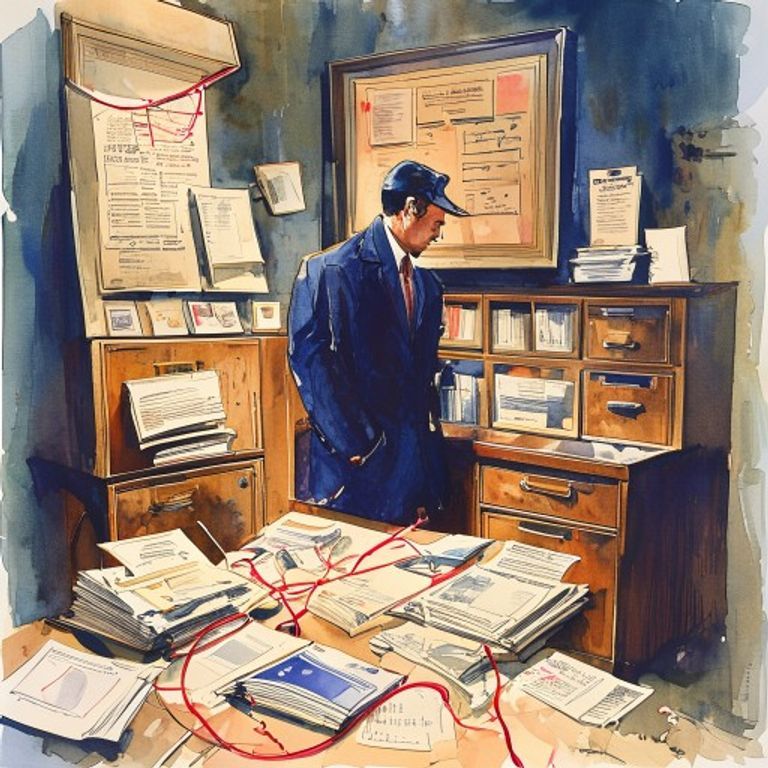
Regular audits and reviews of supplier invoices and payments can also help to detect and prevent fraudulent activities. Procurement managers should implement a system for tracking and monitoring supplier invoices and payments, and ensure that all discrepancies are investigated and resolved promptly.
Using Data Analytics to Identify Suspicious Invoices and Payment Patterns
Data analytics can play a critical role in detecting and preventing supplier invoice fraud. By analyzing payment patterns and identifying suspicious invoices, businesses can reduce the risk of fraudulent activities. This can be done by implementing a system for tracking and monitoring supplier invoices and payments, and using data analytics software to identify any unusual patterns or discrepancies.
For example, data analytics software can be used to identify invoices that are outside of the normal payment range, or payments that are made to suppliers that are not registered for GST. Additionally, data analytics can be used to identify any unusual payment patterns, such as multiple payments made to the same supplier in a short period of time.
Businesses should also use data analytics to monitor supplier performance and identify any potential risks. This can include tracking supplier delivery times, product quality, and customer satisfaction.
Australian Laws and Regulations: Understanding the ATO's Stance on Invoice Fraud
The Australian Taxation Office (ATO) takes a strong stance on invoice fraud, and businesses that are found to be involved in fraudulent activities can face significant penalties. Under the Corporations Act 2001, businesses that are found to be involved in fraudulent activities can face fines of up to $1.7 million, and individuals can face fines of up to $340,000 and/or imprisonment for up to 10 years.
The ATO also has the power to revoke a business's ABN and GST registration if they are found to be involved in fraudulent activities. Additionally, the ATO can impose penalties on businesses that fail to comply with tax laws and regulations, including failing to lodge tax returns and failing to pay taxes.

Businesses should ensure that they are complying with all tax laws and regulations, including the Goods and Services Tax Act 1999 and the Income Tax Assessment Act 1997.
The Role of Compliance Professionals in Preventing and Detecting Invoice Scams
Compliance professionals play a critical role in preventing and detecting invoice scams. They are responsible for ensuring that businesses are complying with all relevant laws and regulations, including tax laws and anti-money laundering laws.
Compliance professionals should ensure that businesses have robust systems in place for verifying supplier invoices and ensuring that all payments are made to legitimate suppliers. They should also ensure that businesses are complying with all tax laws and regulations, including the Goods and Services Tax Act 1999 and the Income Tax Assessment Act 1997.
Compliance professionals should also conduct regular audits and reviews of supplier invoices and payments to detect and prevent fraudulent activities.
Best Practices for Supplier Onboarding and Contract Management to Prevent Fraud
Best practices for supplier onboarding and contract management can help to prevent invoice fraud. Businesses should ensure that all suppliers are thoroughly vetted before they are onboarded, including verifying their identity and ensuring that they are registered for GST.
Businesses should also ensure that all supplier contracts include clear terms and conditions, including payment terms and dispute resolution processes. Regular audits and reviews of supplier invoices and payments can also help to detect and prevent fraudulent activities.
Businesses should also ensure that all supplier contracts are regularly reviewed and updated to ensure that they are compliant with all relevant laws and regulations.
How Supplier Intelligence Platforms like Gumshoe can Help Mitigate Invoice Fraud Risks
Supplier intelligence platforms like Gumshoe can help to mitigate invoice fraud risks by providing businesses with access to real-time data and analytics on suppliers. This can include data on supplier creditworthiness, payment history, and compliance with tax laws and regulations.
Businesses can use this data to make informed decisions about which suppliers to work with and to identify potential risks. Supplier intelligence platforms can also help businesses to detect and prevent fraudulent activities by identifying unusual patterns or discrepancies in supplier invoices and payments.
By using a supplier intelligence platform, businesses can reduce the risk of invoice fraud and ensure that they are complying with all relevant laws and regulations.
| Case Number | Penalty | Offence |
|---|---|---|
| ASIC v Caddick [2020] NSWSC 1691 | $1.7 million | Conspiracy to commit a crime and false accounting |
| ASIC v Goyal [2020] FCA 1453 | $340,000 | Conspiracy to commit a crime and false accounting |
| ASIC v Smith [2019] NSWSC 1666 | $100,000 | False accounting and conspiracy to commit a crime |
| ASIC v Lee [2019] NSWSC 1456 | $50,000 | False accounting and conspiracy to commit a crime |
Uncommon Insights
While many organisations focus on traditional invoice fraud detection methods, there are several lesser-known strategies that can significantly enhance their supplier risk management. For instance, understanding ASIC's enforcement patterns can help organisations identify potential red flags. According to ASIC's Regulatory Guide 247, suppliers who have been subject to ASIC enforcement action in the past are more likely to engage in fraudulent activities. A review of ASIC's enforcement database reveals that in 2020-21, ASIC received over 12,000 reports of potential misconduct, resulting in 215 enforcement outcomes and a total of $1.24 billion in penalties and compensation (ASIC Annual Report 2020-21). Another crucial aspect is the Australian Taxation Office's (ATO) compliance focus on tax invoice requirements under the A New Tax System (Goods and Services Tax) Act 1999. Suppliers who fail to comply with these requirements may be more likely to engage in fraudulent activities. For example, in the case of Re Sunchen Pty Ltd [2018] AATA 273, the ATO denied input tax credits due to the taxpayer's failure to hold compliant tax invoices. This highlights the importance of verifying suppliers' tax invoices to prevent potential fraud. Furthermore, organisations should be aware of the implications of the Corporations Act 2001 (Cth) on their supplier relationships. Section 588G of the Act imposes a positive duty on company directors to prevent insolvent trading, which can have significant implications for suppliers. In the case of ASIC v Cassimatis (No 8) [2016] FCA 1023, the Federal Court imposed penalties of $70,000 on a director for breaching this section. This highlights the importance of conducting thorough due diligence on suppliers to identify potential insolvency risks. In addition to these strategies, organisations can leverage data analytics to identify unusual patterns in supplier invoices. For example, a sudden increase in invoices from a particular supplier or a change in payment terms may indicate potential fraud. By combining these uncommon insights with traditional detection methods, organisations can significantly enhance their supplier risk management and prevent invoice fraud. [blog-body-supplier-risk]Run a free supplier check in seconds
Search by business name, ABN, or ACN. Instant PASS/WARN/FAIL across 8 verification signals.
Start verifying →